2026-07-19
When to Start Wearing Rudraksh — Timing That Actually Matters
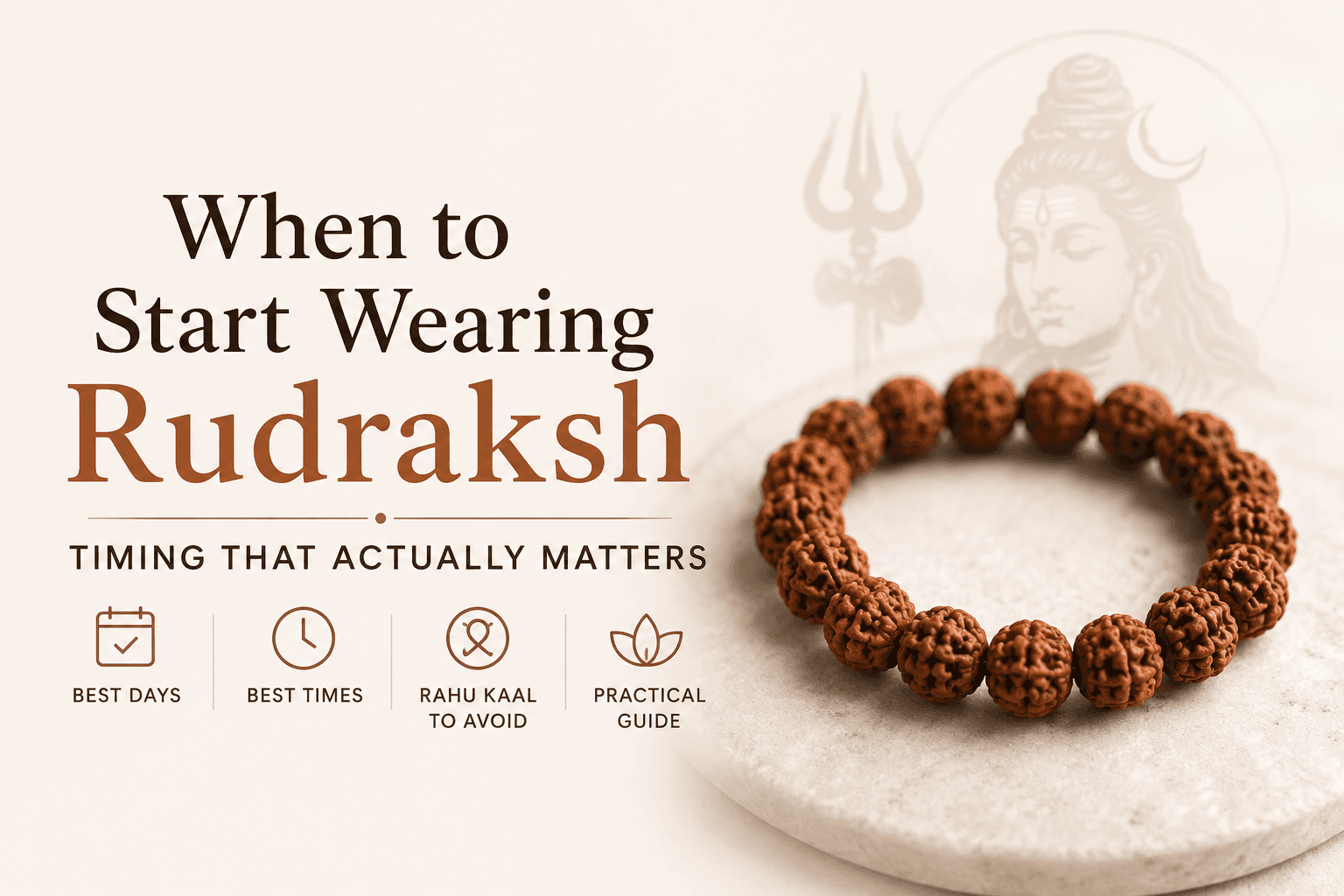
You picked a natural rudraksh bead — not coated, not mixed stock, not something you will take off in a week. Before you string it on your wrist or start japa, one question worth asking is when you begin.
In Vedic tradition, the first time you wear rudraksh is treated as a beginning — similar to starting a new venture or entering a new home. The bead itself does not need a ceremony to be sacred. But choosing an auspicious time aligns your intention with the day's planetary rhythm, which is what Panchang is for.
This guide is practical, not prescriptive. If you already wear rudraksh daily, keep wearing it. If you are putting one on for the first time — or gifting one to someone who asked "is there a good day for this?" — read on.
Why timing matters for first wear
Panchang tracks five daily elements — tithi (lunar day), nakshatra (lunar mansion), yoga, karana, and vaar (weekday). Together they describe the quality of energy on any given day and hour.
Starting something important during a favourable window is called shubh muhurat. Starting during an unfavourable one — especially Rahu Kaal — is traditionally avoided for new beginnings.
Rudraksh is associated with Shiva and meditation. Wearing it for the first time on a calm, auspicious day sets a steady tone for daily practice — whether that practice is japa, quiet breathing, or simply keeping the bead on through your workday.
You do not need to become an astrologer. You need about two minutes and a reliable daily Panchang.
Best days of the week
Monday (Somvaar) is ruled by the Moon and is widely linked to Shiva. For most people in India, Monday morning is the simplest and most accepted day to start wearing rudraksh — especially a five-mukhi rudraksh bracelet for daily wear. If Monday morning is not possible, Monday evening after sunset is also commonly used.
Pradosh (the twilight period around the 13th tithi of each lunar fortnight) and Maha Shivaratri are considered especially powerful for Shiva-related practice. If your first wear coincides with one of these, that is a bonus — not a requirement.
Tuesday, Thursday, and Friday can work if Monday is inconvenient and the day's Panchang is otherwise clear. Avoid starting on days when you already have heavy travel, medical procedures, or major deadlines — not because the bead forbids it, but because your attention matters more than the calendar.
Best times within the day
Abhijit Muhurat is a midday window (roughly 11:45 AM to 12:30 PM, varying by location and season) considered universally auspicious for new beginnings. It is a safe default if you cannot consult a detailed muhurat chart. Note: Abhijit is traditionally skipped on Wednesdays in some regions — check your local Panchang.
The period roughly 96 minutes before sunrise is called Brahma Muhurat — ideal for meditation and mantra. If your first wear includes a short Om Namah Shivaya or a few minutes of silence, this is a strong choice.
Every day also has a Rahu Kaal window — about 90 minutes when new and important work is traditionally postponed. Rahu is a shadow planet associated with confusion, delay, and obstruction. Do not start wearing rudraksh for the first time during Rahu Kaal. Routine wear after the first day is unaffected; this rule applies to the beginning. Rahu Kaal shifts by weekday and location — check today's timing instead of memorising it.
A simple first-wear checklist
- Pick a Monday (or another day with a clear Panchang).
- Check Rahu Kaal for your city and stay outside that window.
- Choose Abhijit or Brahma Muhurat if you want a specific slot.
- Take a shower or wash your hands and face — basic cleanliness, not ritual performance.
- Hold the bead briefly — a few seconds of Om Namah Shivaya or quiet intention is enough.
- Put it on and leave it on — daily wear works when the bead stays on your wrist.
That is the full ceremony for most people. No fire, no priest, no two-hour puja unless your family tradition calls for one.
Bracelet vs mala — does timing differ?
Not really. The muhurat applies to the beginning of your relationship with the bead.
- Bracelet: First wear on wrist during a shubh time. Keep it on through the day if comfortable. See Rudraam's guide to choosing bracelets and malas if you are still deciding which format fits your practice.
- Mala (108 beads): Same timing for first wear. Begin your japa count from the first full round after that.
If you received rudraksh as a gift, the recipient can choose their own first-wear day — Monday with a clear Panchang is still the easiest answer.
What if you already wore it on a "wrong" day?
If you are already wearing rudraksh and only now learning about muhurat — do not take it off or restart. Tradition treats an ongoing practice as established. Muhurat guidance applies to beginnings, not to second-guessing a bead you have worn for months.
Check today's Panchang before you start
Rahu Kaal, Abhijit, and the day's tithi change every day and vary by city. A printed calendar from another region will give you the wrong Rahu Kaal.
Check today's Panchang on GrahaGyan for location-aware Rahu Kaal timings, shubh muhurat windows, and the five Panchang elements for your day. Two minutes in the morning is enough to pick a clean slot for first wear.
Once you have the timing sorted, make sure the bead itself is worth wearing. Rudraam sources 100% natural Nepali rudraksh — hand-selected bead by bead, with a guide on how to tell real rudraksh from fake before you buy.
Join the Rudraam waitlist
Rudraam is not open yet — but when it launches, you will get hand-selected Nepali rudraksh bracelets and malas, ready for daily wear and japa. Join the waitlist at Rudraam.com — leave your mobile number and get one text when the store opens. No spam, ever.
Related reading:
Looking for pure rudraksh from Nepal? Join the Rudraam waitlist — one text when the store opens, no spam. हर दिन GrahaGyan के साथ जुड़े रहें 🙏