2026-07-22
1 Mukhi Rudraksh — Best Muhurat to Wear and Panchang Timing Guide
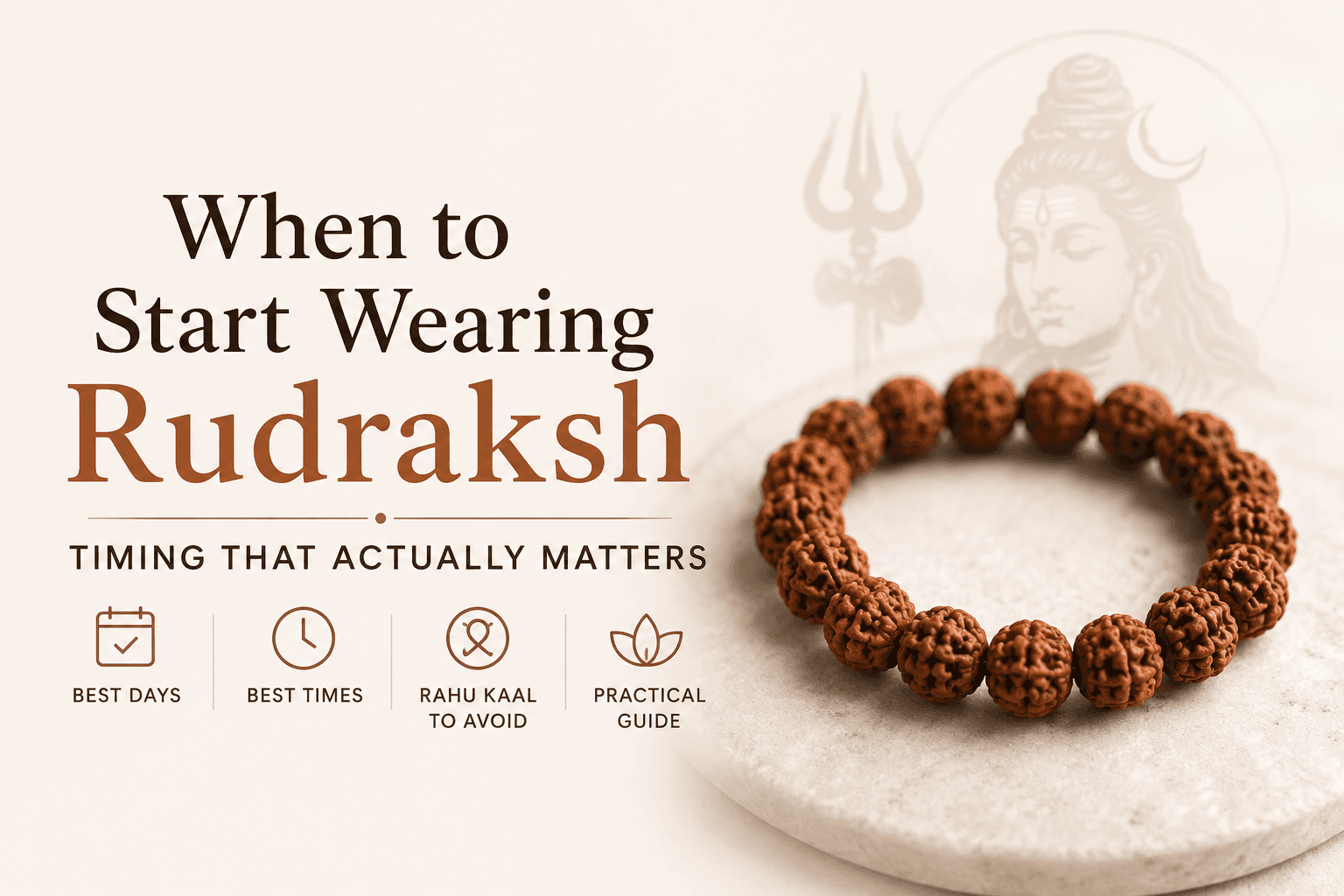
1 Mukhi Rudraksh is among the rarest and most revered rudraksh beads — traditionally linked to Lord Shiva, supreme consciousness, and deep meditation. Before you wear one, two questions usually come up: who can wear it, and when is the right time to start?
For the full answer on eligibility — spiritual seekers, students, women, beginners, and who should avoid fakes — read Who Can Wear 1 Mukhi Rudraksh? A Complete Guide on Rudraam. This post covers what GrahaGyan knows best: Panchang, muhurat, and the right day and hour to wear 1 Mukhi Rudraksh for the first time.
Why muhurat matters more for 1 Mukhi Rudraksh
Most people start with a five-mukhi bead for daily wear. 1 Mukhi is different — it is rarer, more spiritually significant, and often treated as a once-in-a-lifetime beginning rather than a casual bracelet purchase.
In Vedic tradition, wearing any rudraksh for the first time is a shubh arambh (auspicious beginning). For 1 Mukhi, that beginning carries extra weight. Choosing the wrong hour — especially Rahu Kaal — is traditionally avoided for new spiritual commitments, just as it is for marriages, business openings, or property purchases.
You do not need a two-hour puja. You do need a clear Panchang and about two minutes of planning.
Best days to wear 1 Mukhi Rudraksh
Monday (Somvaar)
Monday is ruled by the Moon and is the most widely accepted day to wear rudraksh for the first time — especially 1 Mukhi, which is directly associated with Shiva. Monday morning, after a bath and before starting your day, is the simplest choice.
If Monday morning is not possible, Monday evening after sunset or during Pradosh Kaal (the twilight window around the 13th tithi of each lunar fortnight) is also considered powerful for Shiva-related practice.
Maha Shivaratri and Shravan
Maha Shivaratri and the Shravan month (July–August in most years) are among the most auspicious periods in the Hindu calendar for Shiva devotion. If you are planning first wear around these dates, check the day's full Panchang — the festival day itself is usually excellent, but still avoid Rahu Kaal within it.
Other weekdays
Tuesday, Thursday, and Friday can work if Monday is unavailable and the day's Panchang is otherwise clear. Avoid days when you are distracted, travelling, or under heavy stress — not because scripture forbids it, but because first wear deserves your full attention and intention.
For background on who traditionally chooses 1 Mukhi — seekers, professionals, students — see Rudraam's guide: Who Can Wear 1 Mukhi Rudraksh?
Best times within the day
Brahma Muhurat
The window roughly 96 minutes before sunrise is called Brahma Muhurat — ideal for meditation, mantra, and spiritual beginnings. If your first wear includes Om Namah Shivaya, this is the strongest slot.
Abhijit Muhurat
Abhijit Muhurat (midday, roughly 11:45 AM–12:30 PM, varying by city and season) is considered universally auspicious for new beginnings. It is a safe default if you cannot consult a detailed muhurat chart. Note: some traditions skip Abhijit on Wednesdays — check your local Panchang.
What to avoid: Rahu Kaal
Every day has a Rahu Kaal window — about 90 minutes when new and important work is traditionally postponed. Do not wear 1 Mukhi Rudraksh for the first time during Rahu Kaal.
Rahu Kaal changes by weekday and location. A calendar from another city will give you the wrong time — always check for your city.
Check today's Panchang on GrahaGyan for location-aware Rahu Kaal, Abhijit, and shubh muhurat timings.
Simple first-wear steps for 1 Mukhi Rudraksh
- Pick a Monday (or Shivaratri / Shravan Monday if timing aligns).
- Check Rahu Kaal for your city and stay outside that window.
- Choose Brahma Muhurat or Abhijit if you want a specific slot.
- Clean the bead gently with clean water — no harsh chemicals.
- Chant Om Namah Shivaya briefly while holding it — faith and intention matter more than length.
- Wear it with respect and maintain it properly going forward.
Rudraam's complete guide covers additional traditional steps and who should take extra care with authenticity: Who Can Wear 1 Mukhi Rudraksh — full guide
Authenticity before muhurat
The right timing means little if the bead is fake. Authentic Nepal 1 Mukhi Rudraksh is exceptionally rare — the market is full of carved, coated, or mislabelled beads sold at unrealistic prices.
Before you fix a muhurat, read Rudraam's guide on how to tell real rudraksh from fake and why Nepali sourcing matters. The 1 Mukhi complete guide also covers who should avoid artificial beads and what to ask before buying.
Quick answers
Can women wear 1 Mukhi Rudraksh? Yes. There is no general scriptural prohibition. Rudraam's guide explains this in detail: Who Can Wear 1 Mukhi Rudraksh?
Can beginners wear it? Yes — with a genuine bead and sincere intention. Many first-time wearers start with other mukhis; 1 Mukhi is a deeper commitment because of rarity and cost.
What if I already wore it outside muhurat? Do not remove it or restart. Muhurat guidance applies to beginnings. An established practice is not invalidated by timing alone.
Join the Rudraam waitlist
Looking for authentic Nepali rudraksh — including guidance on rare mukhis like 1 Mukhi? Rudraam hand-selects beads in Nepal, bead by bead. Join the waitlist at Rudraam.com — leave your mobile number and get one text when the store opens. No spam, ever.
Related reading on GrahaGyan:
- When to start wearing rudraksh — timing guide
- Shubh muhurat — what it is and why it matters
- Rahu Kaal explained
Full guide on Rudraam:
Read the complete 1 Mukhi guide on Rudraam, then join the waitlist for authentic Nepali rudraksh. हर दिन GrahaGyan के साथ जुड़े रहें 🙏